
Editorial Board

Carolyn Conner Seepersad is a Woodruff Professor in the George W. Woodruff School of Mechanical Engineering at the Georgia Institute of Technology, where she leads the Digital Design and Manufacturing research group. Carolyn joined Georgia Tech after 18 years as a faculty member in the Walker Department of Mechanical Engineering at The University of Texas at Austin, where she founded the Center for Additive Manufacturing and Design Innovation. She received her PhD and MS from the Georgia Institute of Technology, a BA from Oxford University (as a Rhodes Scholar), and a BS from West Virginia University. Her research interests include design for additive manufacturing, simulation-based design of materials and structures, and process innovation in additive manufacturing. She is an elected member of the Advisory Board of the Design Society and has served as a member and chair of the ASME Design Engineering Division (DED) Executive Committee, an Associate Editor of JMD, and a member of the editorial boards of Additive Manufacturing Letters and 3D Printing and Additive Manufacturing. Dr. Seepersad was the recipient of the ASME Design Automation Award (2022) and best conference paper awards from ASEE, ASME Design Theory and Methodology, ASME Design Automation, and ASME Design Education Conferences.

Dr. Haijun Su is a Professor in Mechanical and Aerospace Engineering Department at The Ohio State University and a Fellow of ASME. Dr. Su received his Ph.D. in Mechanical Engineering from the University of California, Irvine. Dr. Su served as the Chair of the 2016 ASME Mechanism and Robotics Conference. Dr. Su was an Associate Editor of ASME Journal of Mechanisms and Robotics, ASME Journal of Mechanical Design, Mechanism and Machine Theory. Dr. Su is a recipient of many research and service awards including the MSC Software Simulation paper award in 2002, the NSF Faculty Early Career Development (CAREER) award in 2008, the Compliant Mechanism Theory best paper award in 2009 and 2014, and ASME M&R Freudenstein/GM Young Investigator award in 2010, Lumley Research Award in 2015, Lumley Interdisciplinary Research Award in 2018, Outstanding Service Award as Associate Editor for Mechanism and Machine Theory in 2021, Distinguished Service Award as Associate Editor for ASME Journal of Mechanical Design in 2022.
Advisory Board

Dr. Kokkolaras is Professor, and the founding director of the Systems Optimization Laboratory, at McGill University’s Department of Mechanical Engineering. He received his diploma in Aerospace Engineering from Technische Universität München and his Ph.D. in Mechanical Engineering from Rice University. He is currently serving as the Associate Dean for Faculty Affairs at the Faculty of Engineering. Dr. Kokkolaras joined McGill from the University of Michigan at Ann Arbor (UM), where he held research faculty appointments at the Department of Mechanical Engineering (primary) and the UM Transportation Research Institute (joint/courtesy); he is a recipient of the UM College of Engineering Outstanding Research Scientist Award. Dr. Kokkolaras is an ASME Fellow and is currently serving as Publications Chair of the ASME Design Engineering Division and has previously served as Chair of the Design Automation Executive Committee of the ASME Design Engineering Division, Program and Conference Chair of the ASME Design Automation Conference, and Program Co-Chair of the International Conference on Engineering Design.

Katja Hölttä-Otto is Professor of Engineering Design, Mechanical Engineering, at the University of Melbourne, Australia. Prior to that she served as an Associate Professor of product development at the Design Factory at Aalto University, Finland, an Associate Professor in Engineering Product Development at the Singapore University of Technology and Design, and earlier at the University of Massachusetts Dartmouth. She received her M.Sc. (2000) and Ph.D. (2005) in Mechanical Engineering from Helsinki University of Technology. She worked as a visiting scholar at Center for Innovation in Product Development at the Massachusetts Institute of Technology. Professor Hölttä-Otto teaches project-based design courses as well as courses on design theory and methodology. Her research areas of specialization include user centered design including empathy, creativity and need finding in engineering design, as well as design for circular economy, modular product platform development and interdisciplinary engineering education. She is a recipient of the NSF CAREER award and multiple best paper awards. She is an ASME fellow.
Outreach and Engagement

Dr. Scott Ferguson is an Associate Professor in the Department of Mechanical and Aerospace Engineering at North Carolina State University, and runs the Systems, Decisions, and Objectives Lab. He and his students explore and advance how engineers design systems, arrive at actionable decisions, and frame problem objectives when faced with unresolvable uncertainties. He completed his PhD in Mechanical Engineering from the University at Buffalo in 2008, an MS in Mechanical Engineering in 2004, and BS degrees in Mechanical Engineering and Aerospace Engineering in 2002. He is the recipient of the NSF CAREER award (2011), the ASME Design Automation Young Investigator Award (2014), the NC State Outstanding Teacher Award (2012) and the ASEE New Mechanical Engineering Educator Award (2015). He is the current chair of the ASME DED Student and Early Career Professionals Committee, is a member of the ASME Design Automation Conference Executive Committee, and serves on the AIAA MDO TC.
Featured Articles Editor

Leah Chong is an Assistant Professor in the Walker Department of Mechanical Engineering at the University of Texas (UT) at Austin. Prior to UT, she was a postdoctoral associate at Massachusetts Institute of Technology and received her PhD and MS degrees at Carnegie Mellon University and BS degree at Rice University, all in Mechanical Engineering. Her research focuses on human-AI design interaction and teaming, understanding how the integration of computational tools/agents in the engineering design process affects the way engineers think, feel, and make decisions, as well as exploring opportunities for human-centered, complementary partnership between engineers and AI. Some ongoing topics of research include: AI-assisted decision-making, qualitative design with AI, and artificial empathy.

Dr. Anastasia Schauer is an Assistant Professor in the Walker Department of Mechanical Engineering at the University of Texas at Austin. She previously received her Ph.D. in Mechanical Engineering from Georgia Institute of Technology as a National Science Foundation Graduate Research Fellow, and she also holds an M.S. in Mechanical Engineering from Georgia Tech and a B.S. in Mechanical Engineering from the University of Cincinnati. Dr. Schauer’s research program specializes in the development and validation of tools to aid designers in producing innovative, high-quality, and equitable design outcomes. A current focus of the Design Understanding, Cognition, and Knowledge (DUCK) Lab is the study of how designers interface with technology such as virtual reality and generative artificial intelligence to result in better designs for humanitarian engineering projects and beyond.
Associate Editors

Dr. Alfonso Fuentes-Aznar is an Associate Professor of Mechanical Engineering at the Rochester Institute of Technology (RIT). His research focuses on the development of advanced gear transmissions for aerospace, marine, and automotive applications, as well as the creation of innovative computational tools for gear design and analysis. He is one of the developers of IGD – Integrated Gear Design – a software platform that enables the design, simulation, and optimization of gear drives. Prior to joining RIT in 2015, Dr. Fuentes was a Full Professor and Head of the Department of Mechanical Engineering at the Polytechnic University of Cartagena (UPCT), Spain. He has collaborated extensively with international research groups and industry partners to enhance the performance, efficiency, and durability of gear transmissions. His work integrates theoretical modeling and numerical simulations to advance the state of gear technology. Dr. Fuentes has authored over a hundred and sixty publications, including journal articles, conference papers, and technical reports. He regularly contributes to international conferences and technical committees on mechanical design and gear research.

Anurag Purwar is an Associate Professor in the Department of Mechanical Engineering and an affiliate faculty of Institute for Advanced Computational Sciences (IACS) at Stony Brook University. His research lies at the intersection of machine learning and kinematics in service of mechanical design of robots and mechanisms. He is a co-founder of Mechanismic Inc, which brought an educational robotics product called SnappyXO to the market for K-12 and college students and created MotionGen, an AI-driven mechanism design software that has 100,000+ users in more than 150 countries. He is a recipient of several awards including best paper awards at ASME- IDETC conference, ASEE Distinguished Teaching award, Margaret Ashida STEM Leadership Award by The New York State STEM Education Collaborative, ASME Outstanding Student Section Advisor, and three Technology Accelerator Fund Awards from SUNY Research Foundation. He has been a PI and Co- PI of several projects sponsored by NSF, ONR, SUNY Research Foundation, and industry. He received his Ph.D from State University of New York (SUNY) at Stony Brook and B.Tech from Indian Institute of Technology (IIT) Kanpur, both in Mechanical Engineering. Anurag Purwar is a senior member of the National Academy of Inventors.
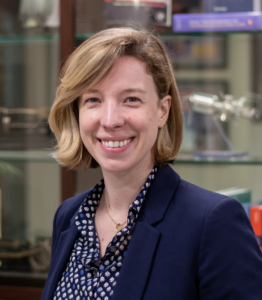
Dr. Astrid Layton is an assistant professor and Donna Walker Faculty Fellow at Texas A&M University in the J. Mike Walker ’66 Department of Mechanical Engineering. She received her Ph.D. in Mechanical Engineering from Georgia Institute of Technology in Atlanta, Georgia. She was elected to serve as member and chair of ASME’s Design Theory and Methodology technical committee. She is also a guest editor for IEEE’s Open Journal of Systems Engineering. She is the recipient of several awards, including a 2021 ASME International Design Engineering Technical Conferences and Computers & Information in Engineering (IDETC-CIE) best paper award. Dr. Layton research focuses on bio-inspired systems design, using biological ecosystems as inspiration for achieving sustainability and resilience in the design of complex human networks/systems/systems of systems.
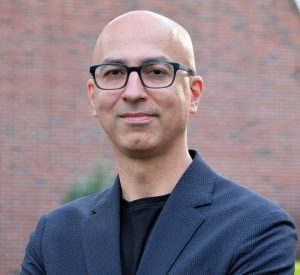
Babak Heydari is an associate professor at the department of mechanical and industrial engineering, and affiliate faculty at the School of Public Policy and the Network Science Institute at Northeastern University. His interdisciplinary research aims at establishing a bridge between engineering system design and computational social sciences where he uses network science to study the architecture of socio-technical and human-AI systems, resilience and its relationship with the emergence of collective behavior and social norms, platform-based sharing economy systems, and co-evolution of structure and behavior in complex systems. He received his Masters and Ph.D. from the Department of Electrical Engineering and Computer Science at UC Berkeley and has 3 years of Silicon Valley start-up experience. He has been the PI and Co-PI of several projects sponsored through NSF, DARPA, INCOSE, SERC and a number of private corporations. Professor Heydari is a recipient of the national science foundation CAREER award.

Bin Zi is currently the Dean and Professor of School of Mechano-Electronic Engineering in Xidian University, China. He received his Ph.D. in Mechatronic Engineering from Xidian University, China, in 2007. He was a visiting scholar with the Chair of Mechanics and Robotics, University of Duisburg-Essen, Germany, from 2011 to 2012, and a visiting professor with the Robotics and Automation Laboratory, Institute of Technology, University of Ontario, Canada, in 2015. Dr. Zi has received the 2019 National Science Fund for Distinguished Young Scholars of China and presided over more than 20 research projects including the NSFC Key Program and National Key R&D Program of China on Intelligent Robots. He has published four monographs, more than 100 papers and more than 100 authorized invention patents. He is the associate editor of ASME Journal of Mechanical Design, IEEE Robotics and Automation Letters and IEEE Transactions on Instrumentation and Measurement. He has been invited as the keynote/plenary speaker in several academic symposiums and conferences. He also served on the technical program or organization committees of several ASME and IEEE conferences.

Bryony DuPont is an Associate Professor of Mechanical Engineering at Oregon State University. She received her B.S. in Mechanical Engineering from Case Western Reserve University and her M.S. and Ph.D. in Mechanical Engineering from Carnegie Mellon University. Her research is in design automation, which is the application of computational algorithms and simulation to help engineering designers make more informed decisions earlier in the design of products and systems. Her work has applications in green design, specifically the design of renewable energy systems and environmentally sustainable products. Dr. DuPont has successfully received research funding from the US Department of Energy, the National Science Foundation, multiple national laboratories and industrial partners. She holds a joint appointment at the National Renewable Energy Laboratory. She teaches in engineering design, wind energy systems design, sustainable product design, and design for manufacturing.
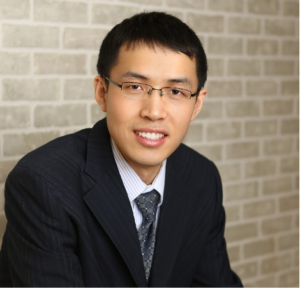
Dr. Chao Hu is currently an Associate Professor in the Department of Mechanical Engineering at the University of Connecticut and the director of the Reliability Engineering and Informatics Laboratory (REIL) at UConn. He received his B.E. degree in Engineering Physics from Tsinghua University (2007) and his Ph.D. degree in Mechanical Engineering (Reliability Engineering) from the University of Maryland, College Park (2011). Dr. Hu’s research interests are engineering design under uncertainty, degradation diagnostics and prognostics of lithium-ion batteries, and prognostics and health management. He is a two-time recipient of the Highly Cited Research Paper Award (2012-2013 and 2020) in the Journal of Applied Energy, the recipient of the 2018 ASME Design Automation Young Investigator Award, and a recipient of the Best Paper Awards at the ASME Design Automation Conference (2013) and the IEEE International Conference on Prognostics and Health Management (2012).
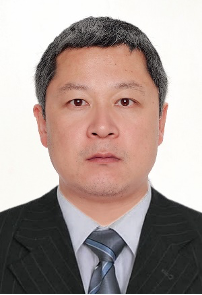
Chenkun Qi is an Associate Professor, School of Mechanical Engineering, Shanghai Jiao Tong University, China. He received his Ph.D. degree in mechanical engineering from the City University of Hong Kong, in 2009. He received his B.E. degree in power mechanical engineering and the M.E. degree in control engineering from the Shanghai Jiao Tong University, China, in 2001 and 2004 respectively. His research interests include design and control of parallel robots, design and control of multi-legged robots, design of parallel robotic mechanisms, micro-nano parallel manipulators, space docking simulation robot, distributed parameter system, system identification, and robot control.

Christine Toh is an Assistant Professor in IT Innovation in the School of Interdisciplinary Informatics at the University of Nebraska Omaha. She obtained her PhD in Industrial Engineering at the Pennsylvania State University. Her research focuses on studying human decision-making and the antecedents of creativity in design, and developing an understanding of the larger context of creativity and innovation in engineering and design. Christine teaches classes in IT Innovation, Design, and Human-Centered Computing. Her research to date has spanned topics such as individual attributes and biases in team decision-making, perceptions and preferences for creativity during concept selection, and the visual representation of design artifacts in virtual engineering learning paradigms. Her current research interests include new technology-enabled information platforms for design, design creativity in technology startup environments, and the nature of relationships between humans and machines.

Dr. Christopher Hoyle is currently an Arthur E. Hitsman Faculty Scholar Associate Professor in the Mechanical Engineering Department at Oregon State University. His research interests are focused upon decision making in engineering design, with emphasis on the early design phase when uncertainty is high and the potential design space is large. His areas of expertise are uncertainty propagation methodologies, Bayesian statistics and modeling, stochastic consumer choice modeling, optimization and design automation. He received his PhD from Northwestern University in Mechanical Engineering in 2009 and his Master’s degree in Mechanical Engineering from Purdue University in 1994. He served as an Adjunct Professor of Mechanical Engineering at Illinois Institute of Technology in 2009 and was an Intern at NASA Ames in 2006. He was previously a Design Engineer, an Engineering Manager, and a Program Manager at Motorola for 10 years before enrolling in the PhD program at Northwestern University.

Christopher McComb is an Associate Professor in the Department of Mechanical Engineering at Carnegie Mellon University. He received dual B.S. degrees in Civil and Mechanical Engineering from California State University-Fresno in 2012. Later he attended Carnegie Mellon University as a National Science Foundation Graduate Research Fellow and obtained his M.S. and Ph.D. in Mechanical Engineering in 2014 and 2016, respectively. His research expertise is in design computation, with specific focuses on machine learning for engineering design, agent-based modeling of human systems, and human-AI collaboration. Application areas include design for additive manufacturing, marine energy devices, and drone delivery systems.
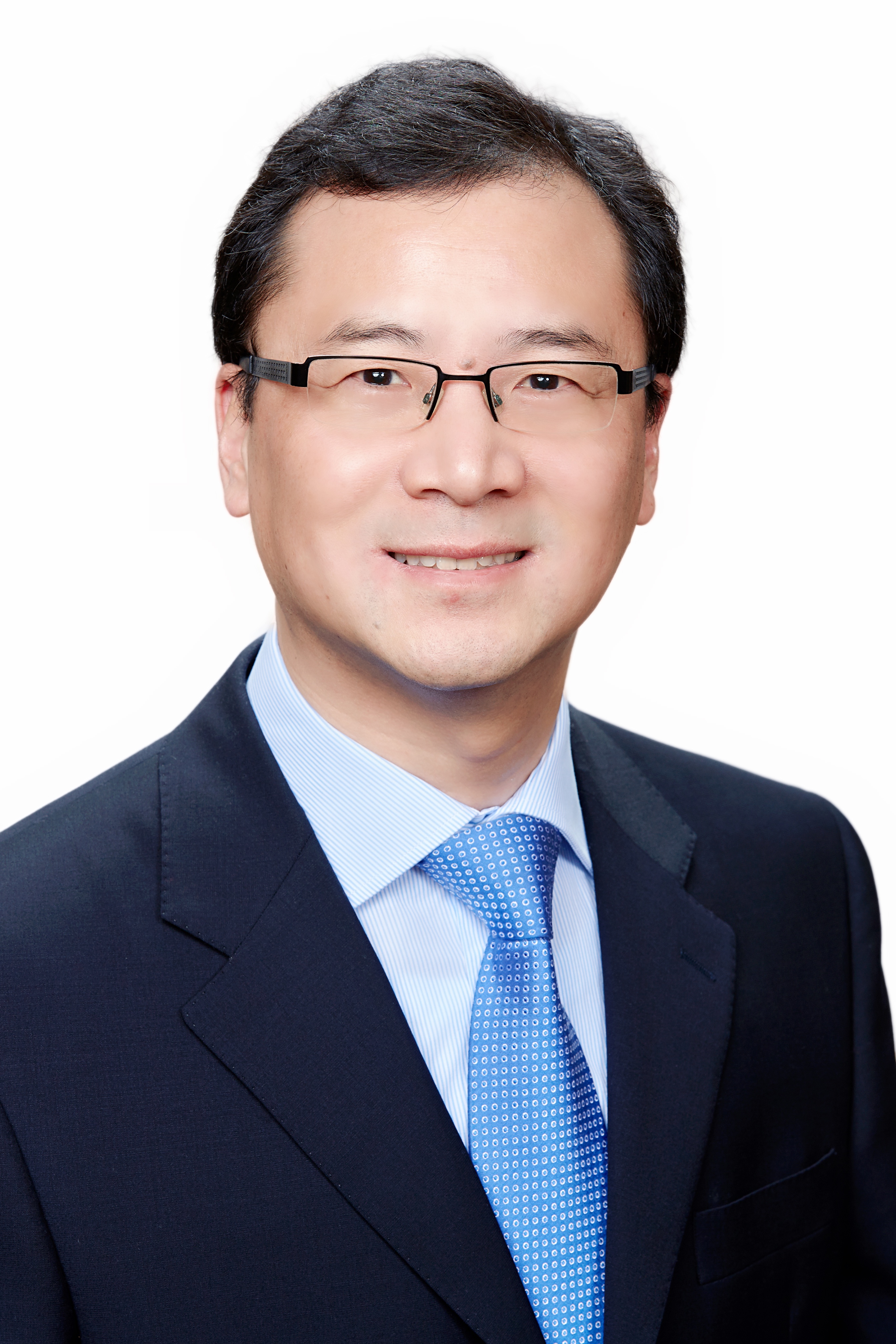
Dr. Dan Zhang is a Chair Professor of Intelligent Robotics and Automation at the Hong Kong Polytechnic University. He received his PhD in Mechanical Engineering from Laval University, Canada in 2000. He joined Ontario Tech University (OTU), Canada, as Assistant Professor in 2004 and was promoted to Associate Professor and Professor in 2006 and 2011 respectively. During the appointment period in OTU, he also served as Founding Chair in the Department of Automotive, Mechanical and Manufacturing Engineering and was awarded the Canada Research Chair in Advanced Robotics and Automation in 2009 and Early Researcher Award by Province of Ontario in 2010. Since 2016, he transferred to York University, Canada as a Kaneff Professor and also took up the role of Department Chair in the Department of Mechanical Engineering. He was awarded the Tier 1 York Research Chair in Advanced Robotics and Mechatronics in 2017. His research interests include synthesis and optimization of parallel and hybrid mechanisms; generalized parallel mechanisms research; smart biomedical instruments (e.g., exoskeleton robots and rehabilitation robotics); AI/robotics/autonomous systems. He is a Fellow of the Canadian Academy of Engineering (CAE), Fellow of the Engineering Institute of Canada (EIC), Fellow of the American Society of Mechanical Engineers (ASME) and Fellow of the Canadian Society for Mechanical Engineering (CSME).

Dr. Douglas Allaire is an Associate Professor and Sallie and Don Davis ’61 Faculty Fellow in the J. Mike Walker ’66 Department of Mechanical Engineering at Texas A&M University where he directs the Computational Design Lab (CDL). He holds B.S., M.S., and Ph.D. degrees from the Department of Aeronautics and Astronautics at the Massachusetts Institute of Technology. His current research focuses on the development of computational methods for the analysis, design, and operation of complex systems. He is specifically interested in uncertainty quantification, multidisciplinary design optimization, and machine learning and has recently applied his research to unmanned aerial vehicle systems and the design and discovery of advanced materials. He is the recipient of several awards, including the 2018 ASME Computers and Information in Engineering Division Young Engineer Award and the ASME DAC Best Paper award in 2018.
Dr. Xin-Jun Liu is a Full Professor with Tenure in Department of Mechanical Engineering at Tsinghua University, Beijing, China. He is currently the MO Chair of IFToMM China-Beijing and the Director of the Beijing Key Laboratory of Transformative High-end Manufacturing Equipment and Technology. His research interest focuses on Parallel Mechanism and Robotic Manufacturing.
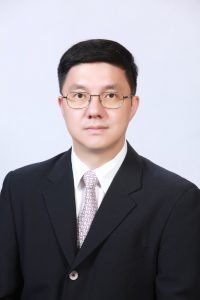
Dr. Eun Suk Suh is an Associate Professor in the Graduate School of Engineering Practice at Seoul National University, Korea. He completed his Ph.D. in Engineering Systems from Massachusetts Institute of Technology in 2005, an M.Eng. in Mechanical Engineering from Cornell University in 1995, and B.S. in Mechanical Engineering from Clarkson University in 1994. His research interests include system architecture design, design for system properties, product design, and technology infusion analysis. Dr. Suh’s previous professional experiences includes chassis design engineering at Hyundai Motor Company and system architecture research and development at Xerox Corporation. He has several international patents and peer reviewed journal publications in the area of printing system design, technology infusion and product platform development.

Girish Krishnan is an associate professor in the department of industrial and enterprise systems engineering and an affiliate faculty at Mechanical Sciences and Engineering and Carle-Illinois College of Medicine at the University of Illinois at Urbana-Champaign. His research lies in the intersection of compliant mechanism design and soft robotics with applications in healthcare and agriculture. He is a recipient of several awards including best paper awards at ASME- IDETC conference, Freudenstein young investigator award, NSF CAREER award, and UIUC award for excellence in advising. he has been a Pi and Co- Pi of several projects sponsored through NSF, USDA- NIFA, Center for compact and efficient fluid power research, and General Motors Corp. He received his Ph.D from University of Michigan-Ann Arbor and MS from Indian Institute of Science, India.
Hongyi Xu is an Associate Professor in the School of Mechanical, Aerospace, and Manufacturing Engineering at the University of Connecticut (UConn). He received his B.S. from Northeastern University (China), M.S. from Tsinghua University (China), and PhD from Northwestern University (USA). His research lies at the intersection of generative AI, architectured material design, digital/cyber manufacturing, and uncertainty quantification. Before joining UConn, Dr. Xu worked at Ford Motor Company and pioneered computational methods for Integrated Computational Materials Engineering and structure optimization for vehicle safety and lightweighting. His research has been recognized with an NSF CAREER Award, the ASME Design Automation Young Investigator Award, selection for the National Academy of Engineering EU-US Frontiers of Engineering symposium, multiple Best Paper/Editor’s Choice Awards from ASME and the Tire Society, and multiple ASME Reviewers’ Awards
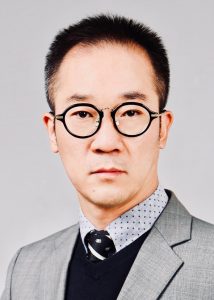
Dr. Ikjin Lee is an associate professor of Mechanical Engineering at Korea Advanced Institute of Science and Technology (KAIST). He received his M.S. Diploma from the Seoul National University (Korea) in 2003, and Ph.D. (2008) in Mechanical Engineering from the University of Iowa. From 2011 to 2013, he was in the University of Connecticut as an assistant professor, and joined KAIST at 2013. In 2009, he received the International Society of Structural and Multidisciplinary Optimization (ISSMO)/Springer prize for a young scientist.

Jessica Menold is an Assistant Professor in the School of Engineering Design and Innovation and the Department of Mechanical Engineering at Penn State. She is the director of the Technology and Human Research in Engineering Design lab and conducts research at the intersection of engineering design, manufacturing, and new product development. Her current work focuses on improving the efficiency and effectiveness of new product development processes, integrating design thinking into engineering education, identifying the factors that contribute to or detract from the success of high-tech startups, and Design for Inspection in advanced manufacturing environments. Her work is dedicated to improving the design of engineered products and systems through evidence-based design methods, rapid prototyping, and performance analysis. Her work is supported by the United States National Science Foundation and the United States Air Force Office of Scientific Research. Dr. Menold is also the Associate Director for Outreach and Inclusion at the Bernard M. Gordon Learning Factory, Penn State’s Makerspace.
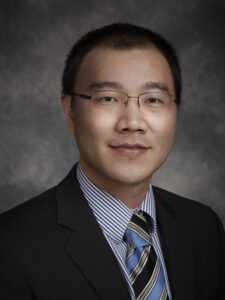
Dr. Jie Zhang is currently an Associate Professor in the Department of Mechanical Engineering and Department of Electrical and Computer Engineering (Affiliated) at the University of Texas at Dallas (UTD). Dr. Zhang received his Ph.D. (2012) in Mechanical Engineering from Rensselaer Polytechnic Institute (RPI), Troy, NY, USA. His research expertise and interests are sustainable energy systems, machine learning, complex engineered systems, and multidisciplinary design optimization. His research has been funded by the U.S. Department of Energy, Department of Defense, National Science Foundation, and energy industry. His major awards include: ONR’s Young Investigator Award (2020), ASME Design Automation Young Investigator Award (2020), Fulbright U.S. Scholar Award (2022-2023), Invited Participant of US-Africa Frontiers of Science, Engineering, and Medicine (2024), 13 best paper awards from multiple journals and IEEE, ASME, AIAA, JSM conferences.
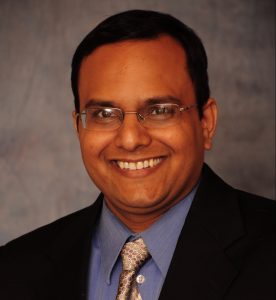
Dr. Jitesh H. Panchal is an Associate Professor in the School of Mechanical Engineering at Purdue University. He received his BTech (2000) from Indian Institute of Technology (IIT) Guwahati, and MS (2003) and Ph.D. (2005) in Mechanical Engineering from Georgia Institute of Technology. Dr. Panchal’s research interests are in the computational design of complex engineering systems with a focus on three areas a) decision making in engineering systems design, b) collective innovation, and c) cyber-physical systems for design and manufacturing. He is a co-author of the book titled “Integrated Design of Multiscale, Multifunctional Materials, and Products”. He is a recipient of CAREER award from the National Science Foundation (NSF), Young Engineer Award and three best paper awards from the ASME International Design Engineering Technical Conferences (IDETC) and Computers and Information in Engineering (CIE) conference, and a university silver medal from IIT Guwahati.
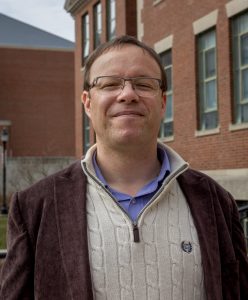
Dr. Norato is currently an Associate Professor in Mechanical Engineering at the University of Connecticut, which he joined in 2014. He holds M.Sc. (2003) and Ph.D. (2005) degrees in Mechanical Engineering from the University of Illinois at Urbana-Champaign and a Bachelor’s degree in Mechanical Engineering from the Universidad Nacional de Colombia (1997). Prior to joining UConn, he worked for and led the Product Optimization group at Caterpillar, where he and his team researched numerical methods and developed computational tools for structural and multidisciplinary optimization. Dr. Norato led the development of Caterpillar’s in-house topology optimization code, as well as the development of a method and tool for optimization of welding sequences to reduce weld-induced distortion, for which he and his collaborators received Caterpillar’s Move the Mountain Award in 2014. His current research interests lie in incorporating failure, geometric, manufacturing and cost requirements in computational topology and shape optimization techniques for the design exploration of novel and highly efficient structures and architected materials. Dr. Norato is a 2020 Air Force Research Lab Summer Fellow, the recipient of the 2019 ASME Design Automation Young Investigator Award, a 2018 NSF CAREER awardee and a recipient of the 2017 Office of Naval Research Young Investigator Program award.
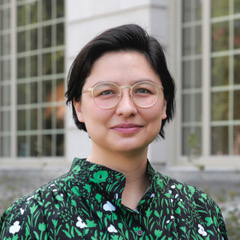
Dr. Kate Fu is an Associate Professor of Mechanical Engineering at University of Wisconsin-Madison. From 2014 to 2021, she was an Assistant and Associate Professor of Mechanical Engineering at Georgia Institute of Technology. Prior to these appointments, she was a Postdoctoral Fellow at Massachusetts Institute of Technology and Singapore University of Technology and Design (SUTD). In May 2012, she completed her Ph.D. in Mechanical Engineering at Carnegie Mellon University. She received her M.S. in Mechanical Engineering from Carnegie Mellon in 2009, and her B.S. in Mechanical Engineering from Brown University in 2007. Dr. Fu is an NSF CAREER awardee and a recipient of the ASME Design Engineering Division (DED) Design Theory and Methodology (DTM) Young Investigator Award.
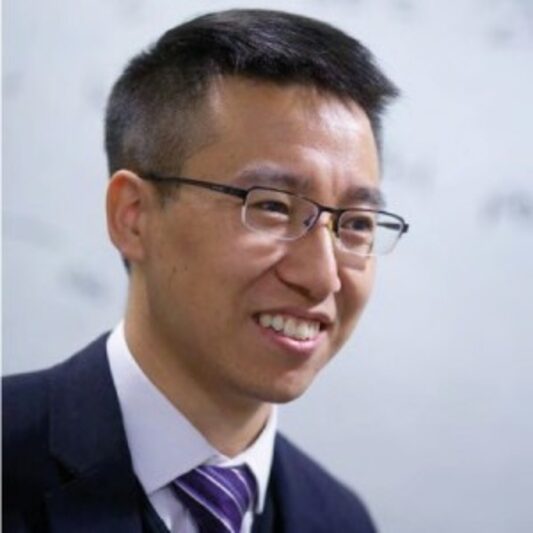
Dr. Ketao Zhang is currently an Assistant Professor in Robotics, Director of the Robotic Systems Research (RSR) group within the Centre for Advanced Robotics (ARQ) and Deputy for Industry Engagement of the Centre for Intelligent Transport in the School of Engineering and Materials Science at Queen Mary University of London (QMUL). His research focuses on the design theory of reconfigurable mechanisms and the development of origami- and bio-inspired robotic systems. He is the author of over 70 articles that have been published in major journals, including Nature, ASME and IEEE Transactions. Dr Zhang is recognised as a leading researcher in his field as evidenced by a host of national/international formal honours received, including the Howard Medal presented by the Institution of Civil Engineers in 2021 and the Best Paper award in ReMAR 2015. Before joining QMUL, he was a post-doctoral researcher at the Aerial Robotics Lab of Imperial College London. He obtained his PhD in Machinery Design and Theory through a joint PhD programme at King’s College London and Beijing Jiaotong University, and his BSc in Mechanical Engineering and Automation with honours from Beijing Jiaotong University.
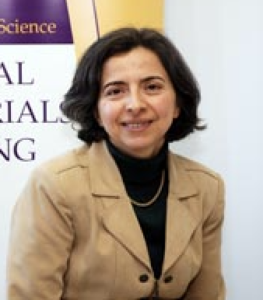
Dr. Leila Notash is a professor in the Department of Mechanical and Materials Engineering of Queen’s University, a Fellow of Engineers Canada and a licensed member of the Professional Engineers Ontario. She obtained her Bachelor of Science degree in Mechanical Engineering from the Middle East Technical University, Ankara, Turkey. She obtained her Master of Applied Science in Mechanical Engineering at the University of Toronto, and received her Ph.D. degree in the Department of Mechanical Engineering at the University of Victoria. Prior to joining Queen’s University, from 1995 to 1996, Dr. Notash was an Assistant Professor at the Department of Industrial & Manufacturing Systems Engineering, University of Windsor. Her current research interest is the investigation and development of serial, parallel and wire-actuated manipulator designs; kinematic, stiffness and force solutions; and calibration methodologies allowing effective and failure safe implementation of the devices; and robotics.
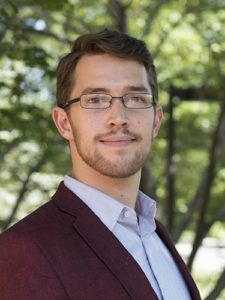
Mark Fuge is an Associated Professor of Mechanical Engineering at the University of Maryland, College Park, where he is also an affiliate faculty in the Institute for Systems Research and a member of the Maryland Robotics Center and Human-Computer Interaction Lab. His staff and students study fundamental scientific and mathematical questions behind how humans and computers can work together to design better complex engineered systems, from the molecular scale all the way to systems as large as aircraft and ships, by using tools from Applied Mathematics and Computer Science. He received his Ph.D. from UC Berkeley and his B.S./M.S. from Carnegie Mellon University. He has received an NSF CAREER award, a DARPA Young Faculty Award, a National Defense Science and Engineering Graduate (NDSEG) Fellowship, and has prior/current support from NSF, NIH, DARPA, ARPA-E, ONR, and Lockheed Martin.
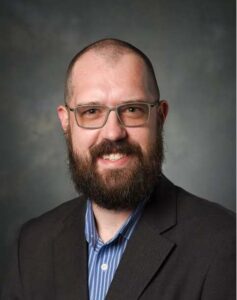
Nicholas (Nick) Meisel is an Associate Professor of Engineering Design in the
School of Engineering Design and Innovation at Penn State and an affiliate
faculty in the Department of Mechanical Engineering. He graduated from Virginia
Commonwealth University in 2010 with his B.S. in Mechanical Engineering and
received his Ph.D. from Virginia Tech in Mechanical Engineering in 2015. He
joined the faculty at Penn State in Fall 2015. Nick has the privilege of
directing the Made By Design Lab, which conducts research in design for additive
manufacturing (AM), including investigation into design concepts that drive
innovation, limits on the manufacturability of designs, and the impact of AM on
student design and manufacturing learning.
Nick has received several awards for his work in the realm of design for
AM, including the NSF CAREER Award in 2021 and the International Outstanding
Young Researcher in Freeform and Additive Manufacturing Award in 2023
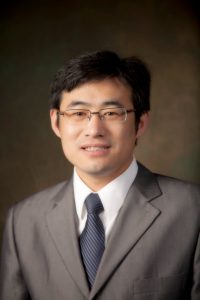
Pingfeng Wang is an Associate Professor in the Department of Industrial and Enterprise Systems Engineering at University of Illinois at Urbana-Champaign (UIUC), and the director of the Reliability Analysis and Safety Assurance (RASA) lab at Illinois. He received his B.S. in 2001 in Mechanical Engineering from University of Science and Technology in Beijing, his M.S. in 2006 in Applied Math from Tsinghua University, and his Ph.D. in 2010 in Mechanical Engineering from University of Maryland. Dr. Wang’s research has been focused on developing new design methods and tools to improve reliability, safety and failure resilience of engineered systems. He is the recipient of the NSF CAREER award (2014), the Young Researcher Award from International Society of Green Manufacturing and Applications (2012), the ASME Design Automation Young Investigator Award (2016), and Best Paper Awards in the ASME Design Automation Conferences (2008 and 2013).
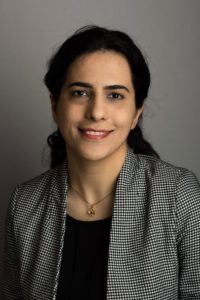
Sara Behdad is an Associate Professor at the Engineering School of Sustainable Infrastructure & Environment at the University of Florida. From 2013 to 2020, she was an Assistant and Associate Professor of Mechanical and Aerospace Engineering and Industrial and Systems Engineering at the University at Buffalo. She received her Ph.D. in Industrial and Enterprise Systems Engineering from the University of Illinois at Urbana-Champaign and her B.S. and M.S. in Industrial Engineering from Tehran Polytechnic. Dr. Behdad leads the Green Engineering Technology for the Community of Tomorrow (GETCOT) Research Laboratory. She has served as a symposium and session chair for the ASME IDETC/CIE and ASME MSEC conferences since 2013. Dr. Behdad served as the ASME Design for Manufacturing and Lifecycle (DFMLC) conference chair and is an ASME DFMLC Technical Committee member. Her expertise lies in product lifecycle engineering, sustainable design, remanufacturing, and decision analysis.

Dr. Serena Graziosi is an Associate Professor at the Department of Mechanical Engineering of Politecnico di Milano. She is a department board member, the delegate for international relations, and the Mechanical Engineering PhD Programme faculty member. She is affiliated with the Italian National Institute for Nuclear Physics and a member of the Advisory Board of the Design Society. She holds a PhD in Mechanical Engineering, including a visiting term at the MIT Department of Mechanical Engineering. She also has two years of work experience in the innovation department of a multinational company. Since July 2018, she has been the Leader of the Design for Additive Manufacturing (DfAM) Special Interest Group, supported and promoted by the Design Society. She has also been a member of the UK Design for Additive Manufacturing Network Steering Committee. Her research explores and develops innovative engineering design methods, tools, and processes to foster product innovation. She also applies and contributes to the growth of those technologies that can help companies digitize and advance their processes. Her research focuses on computational design, metamaterial design, additive manufacturing, and design for sustainability.
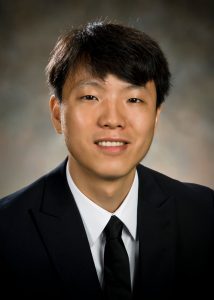
Dr. Sheng Li is an Associate Professor of Mechanical and Materials Engineering at Wright State University. He received his B.S. in Mechanics and Mechanical Engineering from University of Science and Technology of China in 2003, and PhD in Mechanical Engineering from The Ohio State University in 2009. He is an Associate Editor of Mechanism and Machine Theory, and an Associate Editor of ASME Journal of Mechanical Design. He served as the Chair of the STLE Gears and Gear Lubrication Committee. He served as session chair and coordinator for ASME PTG conferences.
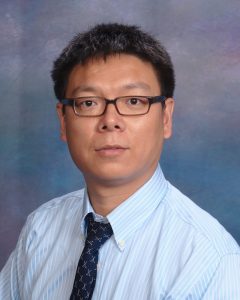
Professor Shikui Chen is an Associate Professor at the State University of New York, Stony Brook. He earned his Ph.D. in mechanical engineering from Northwestern University and a Ph.D. in Automation and Computer-Aided Engineering from the Chinese University of Hong Kong. Dr. Chen’s research interests are in the area of predictive science based design optimization, particularly in structural topology optimization, geometric modeling with level set methods, PDE-constrained optimization, and simulation-driven design under uncertainty. His research work has been funded by government and industry grants including the National Science Foundation (NSF), the University Transportation Research Center (UTRC), Ford Motor Company, Stratasys and SUNY Materials and Advanced Manufacturing Network of Excellence. Dr. Chen is a member of ASME and AIAA. He was the recipient of the ASME Compliant Mechanisms Theory Award in the ASME 31st Mechanisms and Robotics Conference.

Dr. Weifei Hu is a tenured associate professor in the School of Mechanical Engineering at Zhejiang University. He received the B.S. degree in 2008 from Zhejiang University, Hangzhou, China, the M.S. degree in 2010 from Hanyang University, Seoul, South Korea, and the Ph.D. degree in 2015 from University of Iowa, Iowa city, Iowa, USA, all in mechanical engineering. From February 2016 to September 2018, Dr. Hu was a postdoctoral fellow at Cornell University, Ithaca, New York, USA. His research interests include design under uncertainty, AI-driven design, digital twin, and their applications in wind energy and other engineering fields. He has been listed in the World’s Top 2% Scientists by Stanford University since 2024. He is serving as an associate editor of ASME Journal of Mechanical Design, a review editor of the journal Structural and Multidisciplinary Optimization, an editorial board member of the journal Wind Energy, and an associate editor of the journal Wind Energy Science.
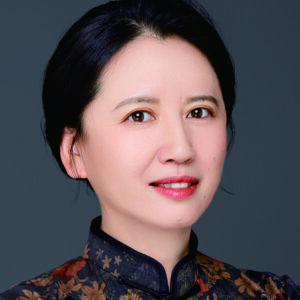
Dr. Yan Chen is a Chair Professor, Department of Mechanical Engineering, Tianjin University, China. She received her Ph.D. in structural engineering from University of Oxford, M.S. and B. Sc. in applied mechanics from Jilin University of Technology. Her research focuses on the kinematics of mechanisms. In the interdisciplinary area among kinematics, mechanics, and structural engineering, she has set up a research field including fundamentals of kinematic theory, deployable structures, and metamaterials, as well as their applications.
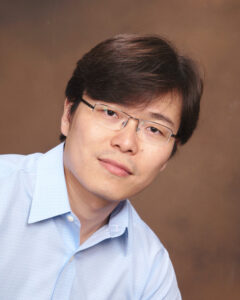
Dr. Zhenghui Sha is an Assistant Professor in the Walker Department of Mechanical Engineering at the University of Texas (UT) at Austin. Before joining UT, he was an Assistant Professor in the Department of Mechanical Engineering at the University of Arkansas and a Postdoctoral Fellow in the McCormick School of Engineering at Northwestern University. Dr. Sha received a Ph.D. from Purdue University in Mechanical Engineering. Dr. Sha’s research focuses on system science and design science as well as the intersection between these two areas. Dr. Sha is the recipient of the 2022 Young Engineering Award (YEA) from the Computers & Information in Engineering (CIE) Division of the American Society of Mechanical Engineers (ASME) and received the Best Dissertation of The Year Award in 2017 from the ASME CIE Division. He received the ASME Robert E. Fulton Best Paper Award twice, in 2013 and 2017. He is the recipient of the 2021 Outstanding Faculty Members of the Year Award, the 2020 Outstanding Teaching Award, and the Open Education Resources (OER) Initiative Award from the University of Arkansas. He was the Reviewer with the Distinction Award for the Journal of Mechanical Design and received the Technical Committee Leadership Award from the ASME CIE Division in 2020. Dr. Sha is the inaugural Chair of the ASME-CIE Hackathon.
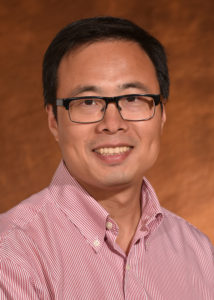
Zhimin Xi is an Associate Professor in the Department of Industrial and Systems Engineering at the Rutgers University – New Brunswick. He received his B.S. and M.S. degree in Mechanical Engineering at the University of Science and Technology Beijing in 2001 and 2004, respectively. He obtained his Ph.D. in Mechanical Engineering (Program of Reliability Engineering) at the University of Maryland – College Park in 2010. His research interests are design for reliability and the applications for reliable autonomous vehicles/robots, lithium-ion batteries, and additive manufacturing. He is the recipient of 2021 ASME – Design Automation Young Investigator Award, 2019 Rutgers A. Walter Tyson Assistant Professorship Award, and 2016 DARPA – Young Faculty Award.
Guest Editors

Anton van Beek is an assistant professor in the School of Mechanical and Materials Engineering at University College Dublin. He leads the Optimization and Data for Designed Systems (ODDS) research group where he focuses on the development of machine learning models to expedite scientific and engineering discoveries. Recent works include the study of random process modelling for discontinuous response surfaces and the use of generative machine learning models for design representation. Dr. van Beek earned his Ph.D. in 2021 from Northwestern University, and his M.S. in 2017 from Shanghai Jiaotong University. Notable achievements include two IDETC DAC Best Paper Awards, a Terminal Year Fellowship, a Predictive Science and Engineering Design Fellowship, and a Walter P. Murphy Fellowship.

Dr. Olivier is an Assistant Professor of Civil and Environmental Engineering at the University of Southern California. She holds a Diplôme d’Ingénieur from École Centrale de Nantes (France), a Ph.D. in Civil Engineering and Engineering Mechanics from Columbia University, and held a postdoctoral appointment at Johns Hopkins University before joining USC in 2021. Dr. Olivier’s research aims to predict and monitor civil infrastructure systems behavior under uncertainty, by combining innovations in probabilistic data analytics and mechanistic modeling. Applications span various scales, from systems to structures to materials, and recent works include development of adaptive Bayesian nonlinear filters for identification of dynamical structural systems, or advancements in Bayesian (graph) neural networks for contingency analysis of power grids and materials surrogate modeling.

Carl Nelson is a professor in the Department of Mechanical and Materials Engineering at the University of Nebraska-Lincoln. He received degrees in mechanical engineering from the University of Oklahoma (BS) and Purdue University (MS, PhD). He is a Fellow of ASME and has served as chair of the ASME Mechanisms and Robotics Committee. His research focuses on mechanical design, robotics, and applications including healthcare. He previously served as an associate editor for ASME Journal of Medical Devices.

Dr. Karl Haapala is a Professor in the School of Mechanical, Industrial, and Manufacturing Engineering at Oregon State University, where he leads the Industrial Sustainability Laboratory. His research addresses sustainable manufacturing challenges, including life cycle engineering, manufacturing process performance modeling, and sustainable engineering education. He has participated in over $39M in research from government agencies, national labs, and industry as PI or co-PI. His work has appeared in more than 180 peer-reviewed proceedings and journal articles. He has received four best paper awards and has been recognized through university and international-level awards, including the OSU Industry Partnering Award, OSU Graduate Mentoring Award, and SME Outstanding Young Manufacturing Engineer Award. He received the 2024 ASME Kos Ishii-Toshiba award for sustained and meritorious contributions to design for manufacturing and the life cycle. In 2019-2020, he was a recipient of a Fulbright-Tampere University US Scholar Award. He previously served as Chair of the Life Cycle Engineering (Manufacturing Engineering Division) and of the Design for Manufacturing and Life Cycle (Design Engineering Division) technical committees of ASME. Dr. Haapala directs the OSU Energy Efficiency Center and U.S. DOE Industrial Training and Assessment Center, which provide technical assistance and workforce training for manufacturing industry.

Kathryn Maupin is a Principal Member of the Technical Staff at Sandia National Laboratories. Motivated by a passion for transforming uncertainty into actionable insights, Kathryn leverages her extensive expertise in model validation, model form error quantification, and Bayesian analyses to drive innovative solutions that enhance research outcomes. Kathryn earned her PhD in Computational Science, Engineering, and Mathematics, along with her M.S. in Computational and Applied Mathematics, both from The University of Texas at Austin. Her fascination with mathematical modeling began at the University of California, San Diego, where she completed her B.A. in Applied Mathematics.
When she is not immersed in data and algorithms, Kathryn enjoys the chaos of family life with her three children and three dogs. Looking ahead, Kathryn aspires to continue pushing the boundaries of computational science while encouraging others to confront ubiquitous uncertainty in their work.
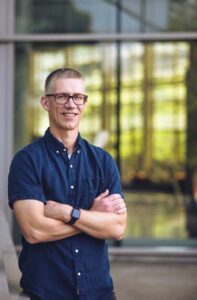
Leifur Leifsson is an Associate Professor with the School of Aeronautics and Astronautics at Purdue University, West Lafayette, Indiana. He received his undergraduate and master’s degrees in mechanical engineering from the University of Iceland, and a PhD degree in aerospace engineering from Virginia Tech. Prior to coming to Purdue, he worked at Airbus UK as a wing integration engineer, and he was an Associate Professor at the Department of Aerospace Engineering at Iowa State University, Ames, Iowa. At Purdue, his current research focuses on advancing fundamental computational methods for multidisciplinary design optimization, surrogate-based modeling and optimization, reduced-order modeling, multifidelity modeling, sampling, and uncertainty quantification. Application areas include aerodynamic shape optimization, aerothermodynamics modeling, aircraft design, and microwave systems design and optimization. Leifsson currently serves as an Associate Editor of the AIAA Journal. He is a member of the AIAA Multidisciplinary Design Optimization Technical Committee.
Liwei Wang is an Assistant Professor in the Department of Mechanical Engineering at Carnegie Mellon University. His research group develops machine learning algorithms, mechanics models, and topology optimization methods for 3D/4D printing, metamaterials, robotic materials, and programmable material systems. Dr. Wang was a postdoctoral scholar (2022–2024) and visiting scholar (2019–2021) at Northwestern University. He earned his B.S. (2017) and Ph.D. (2022) in mechanical engineering from Shanghai Jiao Tong University. He serves on the editorial board of the Structural and Multidisciplinary Optimization (SMO) journal. He is the recipient of the inaugural ASME Design Automation Dissertation Award and the ASME Design Automation Conference Best Paper Award.
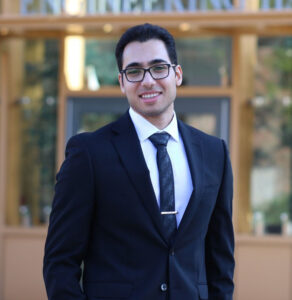
Ramin Bostanabad is a faculty in the Mechanical and Aerospace Engineering Department at the University of California, Irvine (UCI). He is an editorial board member of the Structural and Multi-disciplinary Optimization (SMO) journal and the recipient of 2021 NASA Early Career faculty and 2023 NSF CAREER awards. Dr. Bostanabad earned his Ph.D. in 2019 from Northwestern University where his works were recognized with a number of awards including Terminal Year Fellowship, Martin Outstanding doctoral Fellowship, Predictive Science and Engineering Design Fellowship, and Walter P. Murphy Fellowship. At UCI, his group’s research area is at the interface of design under uncertainty, uncertainty quantification, scientific machine learning, and data-driven computational mechanics.
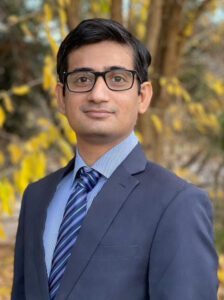
Dr. Subhayan De is an Assistant Professor in the Department of Mechanical Engineering at Northern Arizona University (NAU). He earned his Ph.D. in Civil Engineering in 2018 and M.S. in Electrical Engineering in 2016 from the University of Southern California (USC), supported by a Viterbi Ph.D. Fellowship and a Gammel Scholarship. At NAU, Dr. De leads a research lab dedicated to developing probabilistic, data-driven frameworks that leverage machine learning to efficiently create and validate models aimed at supporting the design of multi-scale, multi-functional structural systems and materials under uncertainty.
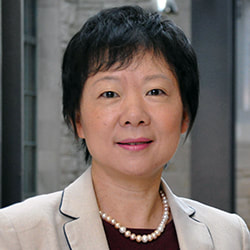
Dr. Wei Chen is the Wilson-Cook Professor in Engineering Design and Chair of Department of Mechanical Engineering at Northwestern University. She received her Ph.D. from the Georgia Institute of Technology, M.S. from University of Houston, and B.S. from Shanghai Jiao Tong University (China), all in mechanical engineering. Dr. Chen is an elected member of the National Academy of Engineering (NAE) and fellow of ASME. She currently serves as the President of the International Society of Structural and Multidisciplinary Design (ISSMO). In the past, she served as a member then Chair of the ASME Design Engineering Division (DED) Executive Committee and was an elected Advisory Board member of the Design Society. Before becoming the editor-in-chief of JMD, Dr. Chen was the Associate Editor of the JMD, Design Science, and the SIAM/ASA Journal on Uncertainty Quantification (JUQ). She also served as the Review Editor of the Structural and Multidisciplinary Optimization (SMO) and the Department Editor for the IIE Transactions. Dr. Chen was the recipient of the joint ASME and Pi Tau Sigma Charles Russ Richards Memorial Award (2021), ASME Robert E. Abbott Award ( 2019) for life time service, ASME Design Automation Award (2015), Intelligent Optimal Design Prize (2005), ASME Pi Tau Sigma Gold Medal achievement award (1998), and the NSF Faculty Career Award (1996). Her research team has received five ASME Design Automation Conference Best Paper Award (2019, 2016, 2014, 2012, and 1998) and the JMD Editors’ Choice Award (2014).
Dr. Xingang Li is a Lecturer in Mechanical Engineering at the University of Melbourne. He earned his Ph.D. in Mechanical Engineering from the University of Texas at Austin, USA. Prior to his doctoral studies, he worked in the automotive industry at OTICS Corporation in Japan for four years. He holds a bachelor’s degree in Mechanical Engineering from Tianjin University, China. He’s passionate about bridging AI and engineering design to create new possibilities, and he is always excited to connect with researchers, practitioners, and collaborators who share similar interests.
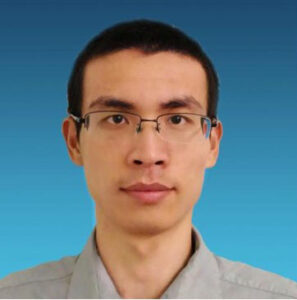
Dr. Zhen Hu is an associate professor in Department of Industrial and Manufacturing Systems Engineering at the University of Michigan-Dearborn (UM-Dearborn). He received his Ph.D. (2014) in Mechanical Engineering from Missouri University of Science and Technology, Rolla, Missouri, USA. His research interests include design under uncertainty, uncertainty quantification, prognostics and health management, Bayesian data analytics, structural health monitoring, and additive manufacturing. He is a review editor of the Structural and Multidisciplinary Optimization Journal and an associate managing editor of ASCE-ASME Journal of Risk and Uncertainty in Engineering Systems, Part B: Mechanical Engineering. He is the recipient of 2023 ASME Design Automation Young Investigator Award and a recipient of the 2023 UM-Dearborn CECS Faculty Research Excellent Award.